There are unforgettable moments in life. The moment you stand before the Holy Kaaba for the first time, feeling shivers run down your spine from head to toe. That moment is not just travel — it's a complete transformation of the soul. And under the Saudi Vision 2030, this journey has become easier and more inspiring than ever before.
This article is your comprehensive guide — from obtaining a visa to Saudi Arabia, through the correct steps of performing Umrah rituals, to discovering the most beautiful tourist attractions in Jeddah and Riyadh.
Planning Your Trip: Visas and the Nusuk App
Types of Saudi Visas: Choose What Suits You
Before packing your bags, you need to know the right visa type for your trip. Saudi Arabia now offers several flexible options:
| Visa Type | Purpose | Duration of Stay | Notes |
|---|---|---|---|
| Umrah Visa | Umrah only | Up to 90 days (68 countries) | Requires a confirmed hotel booking linked to the Nusuk platform |
| Tourist Visa | Tourism and leisure | 90 continuous days | Available electronically to over 60 countries |
| Transit Visa | Passing through the Kingdom | 96 hours | For transiting travelers |
| Family Visit Visa | Visiting resident relatives | Determined per case | Requires first-degree relation |
Nusuk Platform: Your Digital Companion from Home to the Haram
The Ministry of Hajj and Umrah launched the Nusuk platform as a comprehensive digital solution to facilitate the pilgrims' journey before and upon arrival. The platform allows you to:
- Book Tawaf permits and entry to the Grand Mosque at specific times
- Link your hotel booking electronically as a condition for obtaining the visa
- Track your entire itinerary through a smart app
- Receive notifications and alerts regarding travel procedures
Basic Visa Requirements
- A passport valid for at least 6 months from the date of entry
- A confirmed hotel booking in Makkah (and in Madinah if you plan to visit)
- Medical Insurance (automatically included in some visa types)
- Filling out the electronic form and paying fees via the platform
Detailed Steps for Performing Umrah Rituals (For Beginners)
Umrah consists of four essential pillars without which it is invalid: Ihram, Tawaf, Sa'i between Safa and Marwah, and Halq or Taqsir (Shaving or Trimming). Here is how to perform them step by step.
First: Ihram — The Beginning of the Spiritual Journey
Ihram is not just a change of clothing, but a symbolic declaration of detachment from worldly life and turning towards Allah.
How to enter Ihram:
- Bathe and apply perfume before the Miqat (perfuming is done before Ihram, not after)
- Men wear two unstitched white garments; women wear their usual modest Islamic clothing without gloves
- At the Miqat, make the intention in your heart and say: "Labbayk Allahumma Umrah"
- Recite the Talbiyah frequently: "Labbayk Allahumma Labbayk, Labbayk la sharika laka Labbayk, innal hamda wan-ni'mata laka wal-mulk, la sharika lak"
Prohibitions of Ihram: Avoid: cutting hair and nails, using perfume, marital relations, concluding a marriage contract, and hunting.
Second: Tawaf — Seven Circuits Around the House of Allah
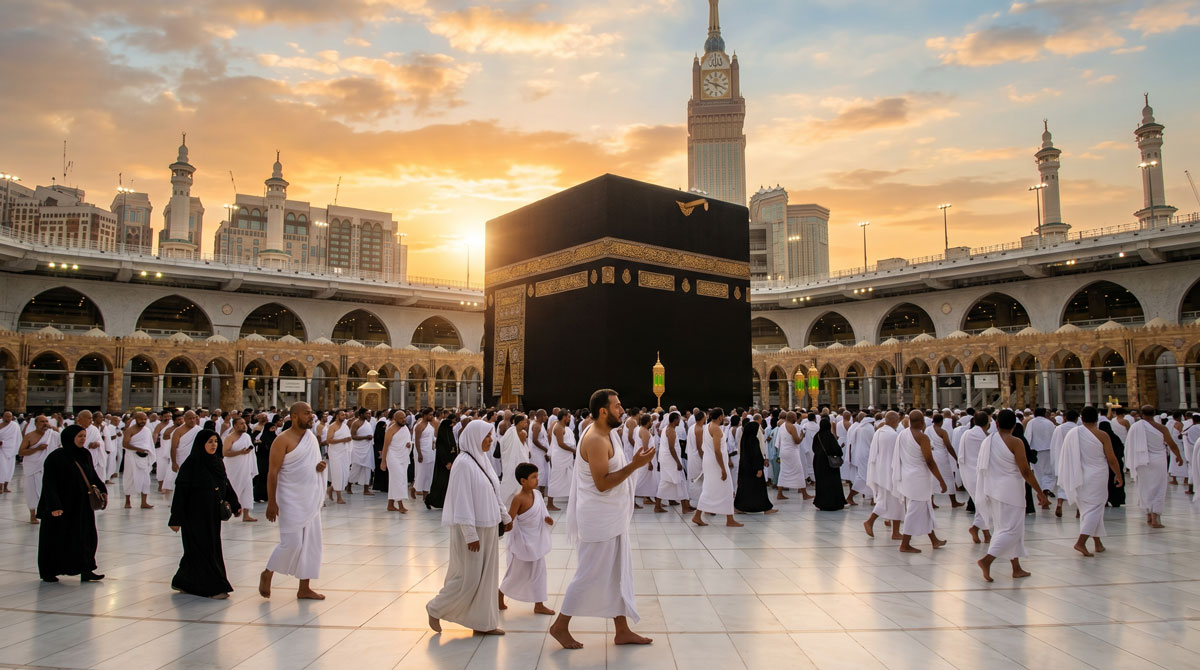
Tawaf starts from the Black Stone and the pilgrim walks counter-clockwise (meaning the Kaaba is always on their left).
How to perform Tawaf:
- Start from the Black Stone and face it by pointing or kissing it if possible without crowding
- Complete 7 full circuits, keeping the Kaaba always on your left
- It is recommended for men to perform Idtiba' (uncovering the right shoulder) and Raml (brisk walking) in the first three circuits
- Engage in frequent remembrance (Dhikr) and supplication during Tawaf
- After finishing, pray two rak'ahs behind the Station of Ibrahim, then drink the blessed Zamzam water
Third: Sa'i Between Safa and Marwah
Sa'i is a revival of the memory of Hajar (peace be upon her) searching for water for her infant son Ismail.
- Sa'i starts from Safa and ends at Marwah
- Going from Safa to Marwah is one circuit, and returning from Marwah to Safa is a second circuit (7 circuits in total)
- Upon reaching the two green markers, men are recommended to jog (move with quick, short steps)
- It is recommended to ascend Safa and Marwah, face the Kaaba, and supplicate
Approximate Duration: Sa'i usually takes between 30 and 40 minutes.
Fourth: Halq or Taqsir — The Moment of Release
This final pillar marks the completion of the Umrah rituals and the release from Ihram.
- Men: It is preferred to completely shave the head; if not possible, trim evenly from all sides
- Women: It is sufficient to cut a small lock of hair the length of a fingertip
- After shaving or trimming, you exit the state of Ihram, and what was prohibited becomes permissible
Key Religious and Historical Landmarks in Makkah and Madinah
In the Precincts of Makkah
Makkah is not just the site of Tawaf; it embraces invaluable religious and historical treasures:
- The Grand Mosque and the Holy Kaaba: The Qibla for Muslims across the globe
- Jabal Al-Nour and Cave of Hira: Where revelation first descended on the Prophet ﷺ; the ascent takes about 45 minutes
- Jabal Thawr: The cave where the Prophet ﷺ hid during the blessed migration
- Aisha Mosque (Al-Taneem): The Miqat for those who wish to enter Ihram for a new Umrah from inside Makkah
- Zamzam Well and its Museum: Today, you can explore its ancient history in the dedicated museum beneath the mosque
In the City of the Prophet ﷺ (Madinah)
Madinah is the city of tranquility and peace — every visitor feels an inexplicable calmness settling in their heart:
- The Prophet's Mosque: The main intent of visiting, to pray therein and send peace upon the Prophet ﷺ
- Al-Baqi: The historical cemetery housing the remains of major Companions
- Quba Mosque: The first mosque built in Islam; praying two rak'ahs there equals the reward of an Umrah
- Madinah Museum: Narrates the city's history using modern technologies and an interactive experience
After Umrah: Discover the Splendor of Tourism in Saudi Arabia
Finished your rituals? Wonderful! The journey isn't over yet — Saudi Arabia is another world waiting for you beyond the gates of the Holy Mosques.
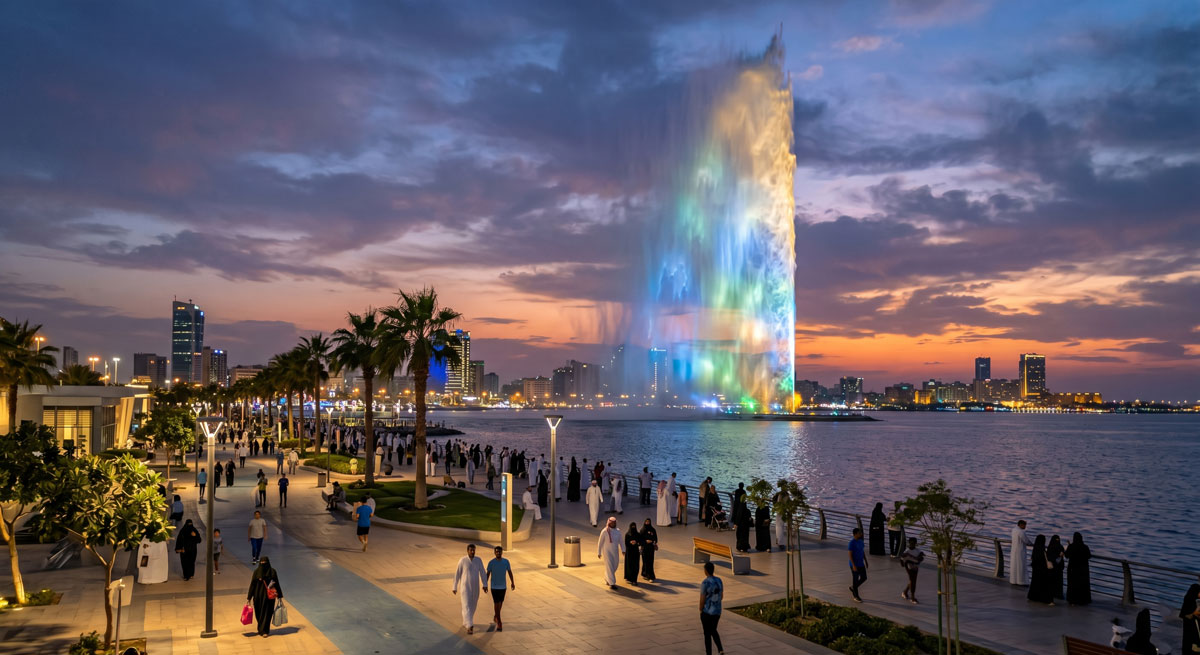
Jeddah: Bride of the Red Sea
Jeddah is a city that never sleeps. History and modernity live side by side here:
- Al-Balad (UNESCO World Heritage): Wander through ancient alleys telling centuries-old civilizational stories
- Jeddah Corniche: Relax on the shores of the Red Sea and watch the tallest fountain in the world
- Palestine Street Falafel: A true experience of authentic Hijazi cuisine
- South Market (Souq Al-Janoub): For shopping, perfumes, and heritage antiques
Riyadh: The Heart of Saudi Modernity
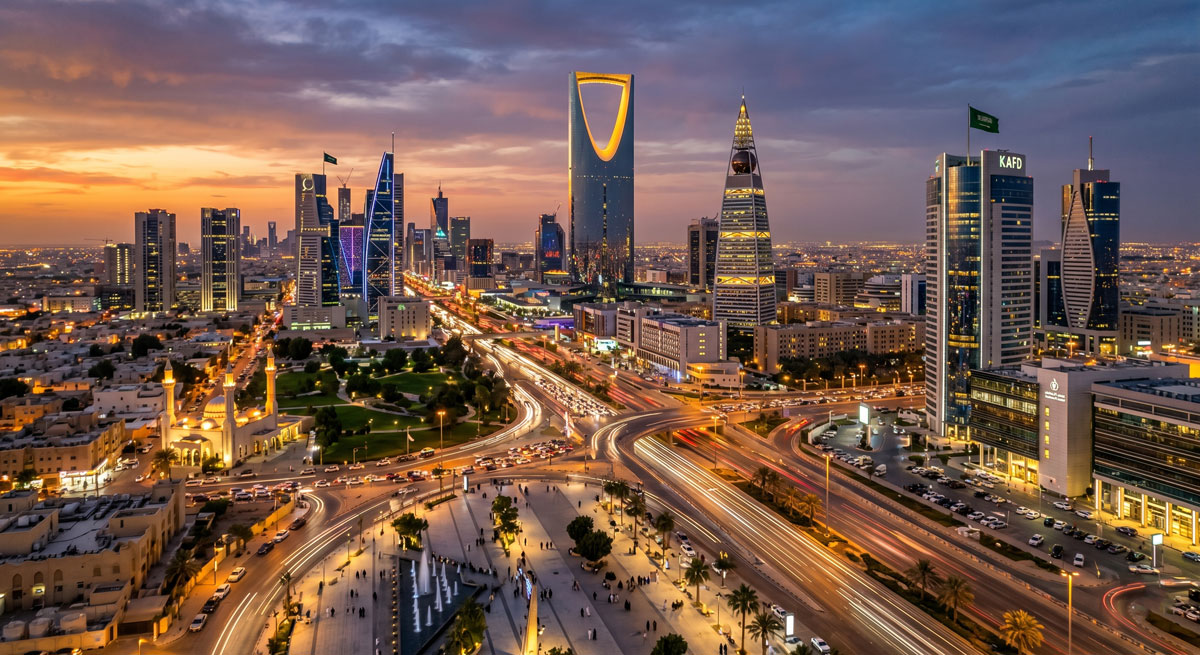
Riyadh is not just a capital — it's the success story of Vision 2030 in its clearest form:
- New Murabba and NEOM (Exhibitions): The latest urban development projects in the world
- Historical Ad Diriyah (Al Turaif): Governance Palace, Clock Tower, and the Friday Mosque
- The National Museum: A journey through the Kingdom's history with dazzling visual experiences
- Al-Matar and Al-Raed District Restaurants: To taste authentic Najdi and international cuisines
Intercity Travel: Haramain High-Speed Railway
The smartest way to travel between Makkah, Jeddah, and Madinah is the Haramain High-Speed Railway, spanning 450 kilometers and linking the three cities with the airport.
| Route | Economy Class | First Class |
|---|---|---|
| Makkah ← Madinah | 150 SAR | 250 SAR |
| Makkah ← Jeddah | 100 SAR | 180 SAR |
| Jeddah ← Madinah | 120 SAR | 220 SAR |
Haramain Train Tips:
- Book your ticket in advance via the official website sar.hhr.sa
- Arrive at the train station at least 30 minutes early
- The train passes directly through the Jeddah International Airport station — allowing you to disembark there if your flight departs from Jeddah
- Economy class is very comfortable; you only need to upgrade if you desire extra luxury
Golden Tips for a Safe and Comfortable Trip
What to Pack in Your Bag
- Ihram Garments: Bring two sets for replacement if needed
- Comfortable, laceless shoes: You will walk extensively; Haram carpets can sometimes be rough
- Skin and lip moisturizers: The weather is very dry, especially in summer months
- Light medical mask: Useful during peak crowding hours
- High-capacity Power Bank: You will use the Nusuk app and take photos all day
- Light, modest clothing for women: Abayas are preferably made of pure cotton
Health and Safety Guidelines
- Get the Meningococcal meningitis vaccination, which is a requirement to enter the country for Umrah
- Consult your doctor before traveling if you suffer from chronic or heart diseases
- Drink copious amounts of Zamzam water and regular water — especially in summer when temperatures exceed 45°C
- Saudi Arabia provides emergency clinics and hospitals directly in the vicinity of the two Holy Mosques
- Medical insurance is mandatory for Umrah visa holders — make sure to carry your policy document with you
General Etiquette and Instructions
- Respect prayer times; shops close during these periods
- Avoid taking photos inside mosques except in designated areas
- Modest dress is required in public places for all visitors
- Use the Visit Saudi app to learn about updated events and destinations
Suggested 10-Day Itinerary
| Day | Location | Activity |
|---|---|---|
| 1–2 | Makkah | Arrival, hotel check-in, performing Umrah rituals |
| 3 | Makkah | Visiting Jabal Al-Nour and historical sites |
| 4 | Haramain Train | Traveling to Madinah |
| 5–6 | Madinah | Visiting the Prophet's Mosque, Quba Mosque, Al-Baqi |
| 7–8 | Jeddah | Return train, Old Town (Al-Balad), Corniche, Red Sea |
| 9–10 | Riyadh / Departure | Ad Diriyah, National Museum, Departure |
An Umrah trip is not just an obligation you perform and return from; it's an experience that rebuilds you from the inside. And under the 2030 Vision, which recorded a historic 16.9 million pilgrims from outside the Kingdom in 2024, the country has become a unifying destination for both the soul and discovery. Plan smartly, use the Nusuk platform, and set off with an open heart — the Kingdom awaits you with all its secrets and generosity. 🕋
This article is for general guidance purposes. Always refer to official sources to verify the latest requirements and regulations before traveling.